When planning a trip, one of the first things travelers look at is a hotel’s star rating. Whether you’re booking a budget stay or a luxury escape, those stars play a crucial role in shaping your expectations. But have you ever wondered what hotel ratings really mean? Is a 5-star hotel always better than a 3-star hotel? And who decides these ratings in the first place?
In this comprehensive guide, we’ll break down how hotel ratings work, the differences between 3-star and 5-star hotels, and how you can use this information to make smarter booking decisions.
What Are Hotel Star Ratings?
Hotel star ratings are a system used to classify hotels based on their quality, amenities, and services. The higher the number of stars, the more luxurious and feature-rich the hotel is expected to be.
Typically, hotels are rated from 1 star to 5 stars:
- 1-Star: Basic accommodations with minimal services
- 2-Star: Budget-friendly with limited amenities
- 3-Star: Mid-range comfort with additional services
- 4-Star: Upscale hotels with premium features
- 5-Star: Luxury properties offering exceptional service and facilities
However, it’s important to understand that there is no universal global standard for hotel ratings. Different countries, organizations, and booking platforms may use slightly different criteria.
Who Determines Hotel Ratings?
Hotel ratings are assigned by various organizations, including:
- Government tourism boards
- Independent rating agencies
- Travel websites and booking platforms
- Industry associations
For example, in some countries, official tourism authorities inspect hotels and assign ratings based on strict criteria. In other cases, private organizations or travel platforms use their own evaluation systems.
Additionally, user-generated reviews also influence perception. A 3-star hotel with excellent guest reviews may outperform a poorly rated 5-star hotel in terms of satisfaction.
Key Criteria Used in Hotel Ratings
While standards vary, most rating systems evaluate hotels based on several common factors:
1. Room Quality
- Size and layout
- Furniture and décor
- Cleanliness and maintenance
2. Amenities
- Wi-Fi availability
- Swimming pool
- Gym or fitness center
- Spa services
- Restaurants and bars
3. Service Level
- Staff professionalism
- Concierge services
- Room service availability
- Multilingual support
4. Facilities
- Business centers
- Conference rooms
- Parking
- Elevators and accessibility
5. Location
- Proximity to attractions
- Safety and surroundings
- Scenic views
What Is a 3-Star Hotel?
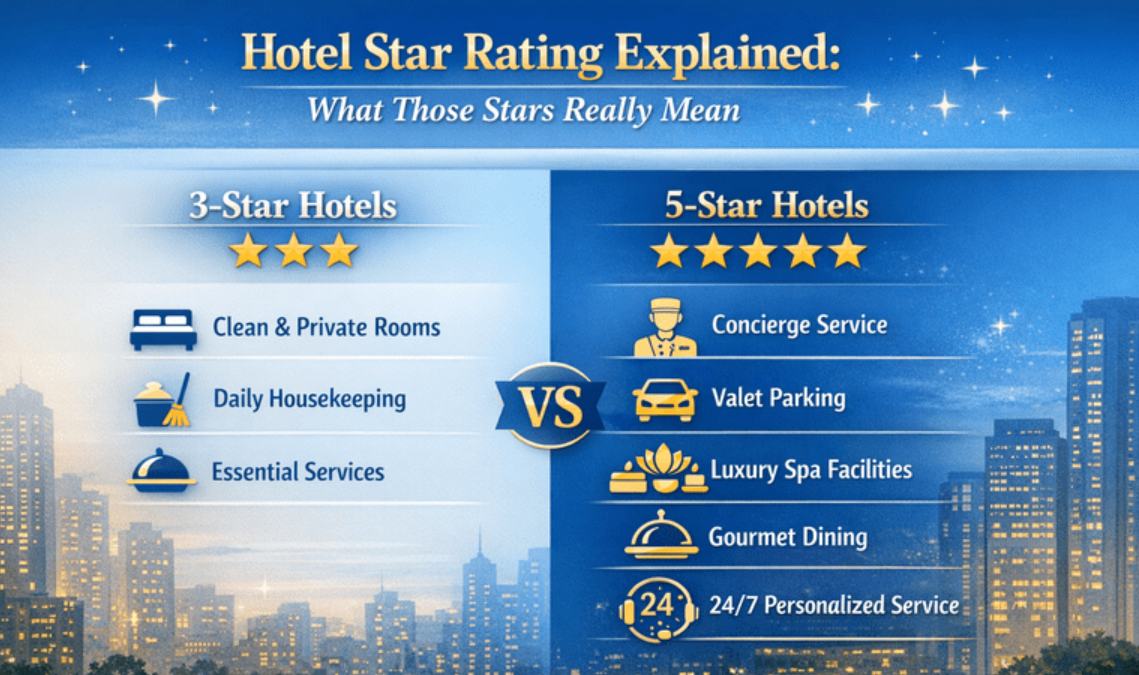
A 3-star hotel is considered a mid-range option that balances affordability and comfort. These hotels are ideal for travelers who want more than just basic accommodation but don’t need luxury-level services.
Features of 3-Star Hotels
- Comfortable, well-furnished rooms
- Daily housekeeping
- On-site restaurant or breakfast service
- Basic fitness center or small pool (sometimes)
- Front desk service (often 24 hours)
- Free Wi-Fi
Pros of Staying in a 3-Star Hotel
- Affordable pricing
- Good value for money
- Suitable for business and family travel
- Reliable basic amenities
Cons of 3-Star Hotels
- Limited luxury features
- Smaller rooms compared to higher-rated hotels
- Fewer personalized services
Who Should Choose a 3-Star Hotel?
- Budget-conscious travelers
- Business travelers on short trips
- Families looking for comfort without overspending
What Is a 5-Star Hotel?
A 5-star hotel represents the highest level of luxury, comfort, and service. These properties go above and beyond to provide an exceptional guest experience.
Features of 5-Star Hotels
- Spacious, elegantly designed rooms or suites
- Premium bedding and high-end furnishings
- Multiple fine-dining restaurants
- Full-service spa and wellness center
- Valet parking and concierge services
- 24/7 room service
- Personalized guest experiences
Pros of Staying in a 5-Star Hotel
- Exceptional comfort and luxury
- Top-tier service and attention to detail
- Wide range of facilities and amenities
- Memorable experiences
Cons of 5-Star Hotels
- Expensive rates
- Additional costs for premium services
- May feel excessive for short stays
Who Should Choose a 5-Star Hotel?
- Luxury travelers
- Honeymooners and couples
- Business executives
- Travelers seeking premium experiences
3-Star vs 5-Star Hotels: Key Differences
Here’s a direct comparison to help you understand the differences:
| Feature | 3-Star Hotel | 5-Star Hotel |
|---|---|---|
| Price | Affordable | Expensive |
| Room Quality | Comfortable | Luxurious and spacious |
| Amenities | Basic to moderate | Extensive and high-end |
| Service | Standard | Personalized and premium |
| Dining Options | Limited | Multiple fine-dining choices |
| Facilities | Basic | Comprehensive (spa, gym, pools) |
| Experience | Practical and convenient | Exclusive and memorable |
Common Misconceptions About Hotel Ratings
1. More Stars Always Mean Better Experience
Not necessarily. A 5-star hotel may offer more luxury, but that doesn’t guarantee a better stay for everyone. Some travelers prefer the simplicity and affordability of a 3-star hotel.
2. Ratings Are the Same Worldwide
Different countries have different standards. A 4-star hotel in one country may feel like a 3-star in another.
3. Star Ratings Reflect Guest Reviews
Star ratings are based on facilities and services, not guest satisfaction. That’s why reading reviews is equally important.
The Role of Online Reviews
In today’s digital world, platforms like booking websites and travel apps have changed how people evaluate hotels.
Why Reviews Matter
- Provide real guest experiences
- Highlight pros and cons
- Reveal service quality
- Help identify hidden issues
Tips for Reading Reviews
- Look for consistent patterns
- Focus on recent reviews
- Pay attention to cleanliness and service comments
- Don’t rely on a single review
How to Choose Between a 3-Star and 5-Star Hotel
Choosing the right hotel depends on your travel needs, budget, and preferences.
Choose a 3-Star Hotel If:
- You want to save money
- You’ll spend most of your time বাইরে exploring
- You only need basic comfort
Choose a 5-Star Hotel If:
- You want a luxury experience
- You plan to spend time enjoying hotel facilities
- You’re celebrating a special occasion
Tips for Getting the Best Value
1. Compare Prices Across Platforms
Different booking sites may offer different rates for the same hotel.
2. Book in Advance
Early bookings often come with discounts.
3. Look for Deals and Packages
Many hotels offer bundled deals that include meals or spa access.
4. Travel During Off-Peak Seasons
Prices are usually lower when demand is low.
5. Check Location Carefully
A well-located 3-star hotel can be more convenient than a remote 5-star property.
The Future of Hotel Ratings
The hotel industry is evolving, and so are rating systems. Modern travelers value:
- Personalized experiences
- Sustainability and eco-friendliness
- Smart technology integration
- Authentic local experiences
As a result, traditional star ratings are becoming just one part of the decision-making process.
Final Thoughts
Understanding how hotel ratings work can help you make better travel decisions. While 5-star hotels offer unmatched luxury and service, 3-star hotels provide excellent value and comfort for many travelers.
Ultimately, the “best” hotel isn’t determined by the number of stars—it’s the one that fits your needs, budget, and travel goals.
So next time you’re booking a hotel, don’t just look at the stars. Dive deeper into what each rating वास्तव means, read reviews, and choose a place that truly enhances your travel experience.